The Chemistry and Physics of Color
The world as we know it is full of color. There is also much light in this world that we cannot see. You must have wondered at some point how light is even possible.
This resource begins by an explanation of the physics behind everyday objects reflecting color, and proceeds to analyze different types of luminescence.
For each toggle button, try to think of the answer before clicking the dropdown!
This resource is associated with Maggie Z’s Schoolhouse session “The Chemistry and Physics of Color.“
What Causes Color?
Before delving deeper into the chemistry of color, we must first understand the physics of light and color. We begin by focusing on the visible light reflected when everyday objects interact with white light.
White light is not a color, but rather a combination of all colors in the visible light spectrum. This can be shown by light dispersion and refraction via a glass prism.
Light is also energy (electromagnetic). The concept of light itself is difficult to intuitively internalize, but for now, we will focus on the fact that since light is energy, it will excite electrons of atoms when shining on it.
This will cause electrons to jump up to orbitals of higher energies. However, an electron must absorb exactly the amount of energy needed to make the jump, which is the energy difference between those two orbitals. Thus, the electron will only absorb light of certain wavelength bands. The rest of the light is reflected or scattered.
But what happens to the electron? Does it stay at that higher energy level?
No. As you might have guessed, this configuration with gaps in lower energy levels is highly unstable. The electron will drop back down. However, it does not emit a light photon as it drops down! We will talk about these cases later on in this guide. It is very important to understand that electrons do not emit light photons when interacting with white light shone on everyday objects. The reason why we see color in these objects is due to reflection. Instead of dropping down in one step, the electron dissipates its energy into surrounding chemical bonds in very small steps. This is called molecular vibration.
The absorption and reflection of light allows us to see color in our daily lives. Each element / molecule has varying energy differences between energy levels, and therefore will absorb different wavelengths of light.
Why?
Each element has a different number of protons and electrons. Thus, each element has a distinct nuclear pull. Compounded with electron shielding and orbitals, this creates a distinct electron landscape for each element.
Since each molecule has different chemical bonds and therefore varying energy differences between energy levels, each molecule will absorb different wavelengths of light. Scientists can use absorption and emission spectra to identify elements and molecules! For example, we can find out what elements stars are made of using a technique called astronomical spectroscopy.
If an object absorbs mostly a certain color light, the light that it reflects will overall be perceived by us as the complementary color. For example, carrots absorb blue and violet light due to the beta-carotene they contain. Thus, they appear orange to us. Orange is the complementary color of blue.
Why?
Remember, white light is the combination of all colors. If you remove a color, it is no longer in the mix, and the result shifts to the complementary color.
This is also why when we mix all play-dough colors, the result is a dark muddy mass! Adding more pigments means absorbing more light, until all colors in white light are absorbed.
Colors Beyond Color
There is more to light than the visible light spectrum. As promised, in this section we will talk about the cases when electrons emit light photons as they drop back down from higher energy levels.
We will discuss fluorescence, chemiluminescence, electroluminescence, and incandescence.
Note: Of course, these are not all the possible types of luminescence!
Another Note: Incandescence is a fun way of producing light; however, it is important to note that it is not a type of luminescence! Luminescence strictly refers to the emission of light by something that has not been heated. Incandescence clearly does not satisfy this condition. More on incandescence later!
To begin with, how come electrons will emit light photons when dropping down in these cases, but not in the previous section when we were talking about objects interacting with white light?
There are two main reasons for this.
- Everyday objects like oranges and blankets typically have molecular structures that are more flexible than, say, fluorescent dyes that are more rigid. Electrons that get excited in everyday objects can release their energy into surrounding chemical bonds through vibrating and shaking (thermal energy) as they drop back down. However, rigid chemicals like ringed aromatic molecules cannot vibrate easily to rid themselves of this energy. Thus, they employ photon-reemission instead. It is much easier and faster for an electron to drop down through vibrational transitions than releasing light photons.
- In everyday life, objects get excited by white light. However, in the cases covered in the contents, electrons are excited by light, electricity, heat, or chemical reactions. This can cause the electron to reach states where it is not possible to release all the energy through vibrations alone.
Remember, a guiding principle behind all this light photon emission is the law of conservation of energy. Since energy cannot be created or destroyed, it has to go somewhere, and will convert between forms. In the following cases, the electron might be absorbing UV light, heat, chemical energy, or electric energy, and converting that into light.
Fluorescence
In literature, the word “fluorescent” is commonly used to describe things that are simply colorful or vivid, which strays far from the scientific definition.
Fluorescent materials emit a new color after absorbing higher-energy light. UV light is commonly used to observe fluorescent materials, which absorb the UV light and emit light of longer wavelengths.
What exactly happens to the electron?
The electron first absorbs the UV light. It is then excited to very high energy levels, from where it first loses some energy through vibrational micro-transitions. Then, it drops the rest of the way by emitting a light photon! The wavelength of the photon matches the energy difference between the energy levels that the electron dropped between.
Some examples of fluorescent materials are organic dyes and laundry detergents.
Check out this video for a deeper explanation of how fluorescence works!
Fun fact: Passports have beautiful fluorescent components that can be viewed under UV light. This is helpful for identifying fakes.
Phosphorescence is very similar to fluorescence, except it can continue emitting light even after the light source is removed. This is because electrons drop into a delayed state and can continue to glow for seconds, hours, or even days. The exact phenomenon behind this exceeds the scope of this resource and tutoring session!
Chemiluminescence
As you might have guessed, chemiluminescence refers to the light generated by chemical reactions.
How can chemical reactions generate light?
Chemical reactions involve rearranging chemical bonds between elements and forming new molecules. Sometimes, the energy released by the reaction leaves electrons in highly unstable states, and excited electrons emit light photons as a result.
One example is glow sticks! Glow sticks contain small glass vials that break when you bend the sticks, and release their hydrogen peroxide contents. This reacts with the solution in the glow stick to produce light.
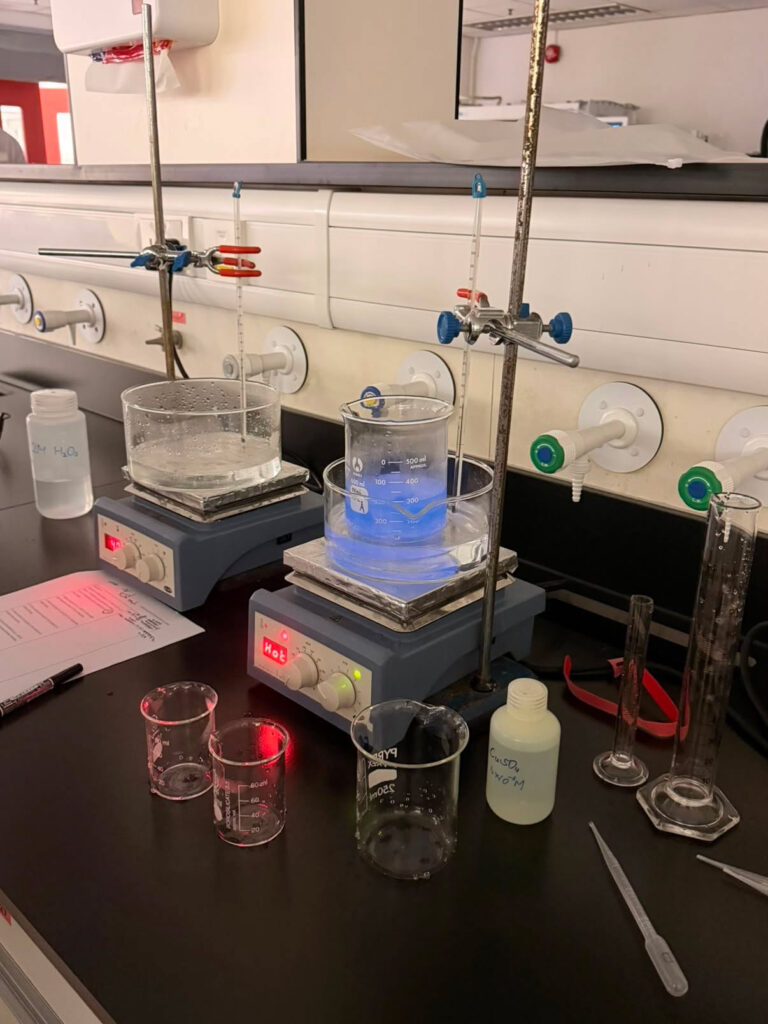
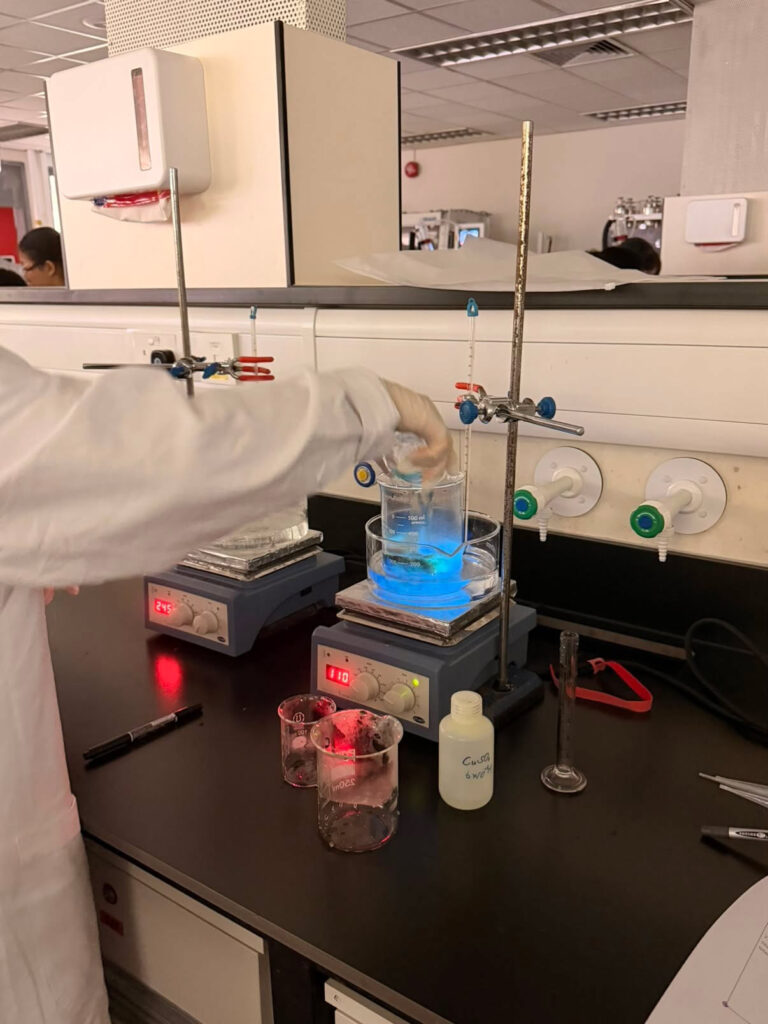
Another example is luminol. Luminol glows blue when it reacts with iron, and is often used at crime scenes to detect trace amounts of blood.
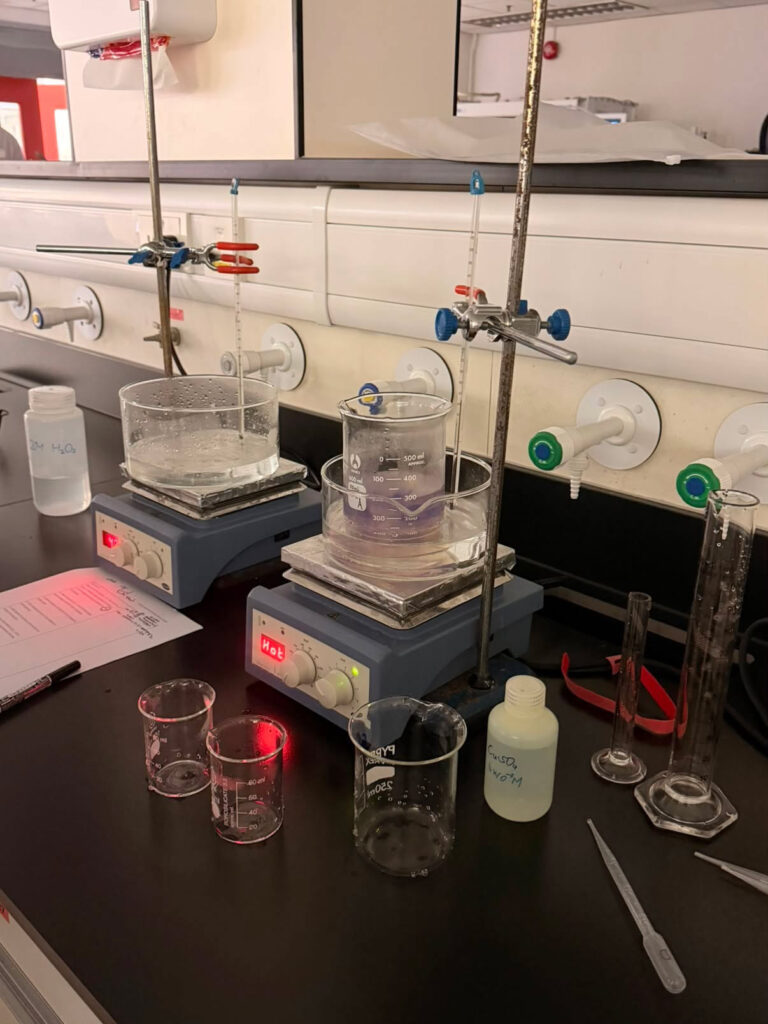
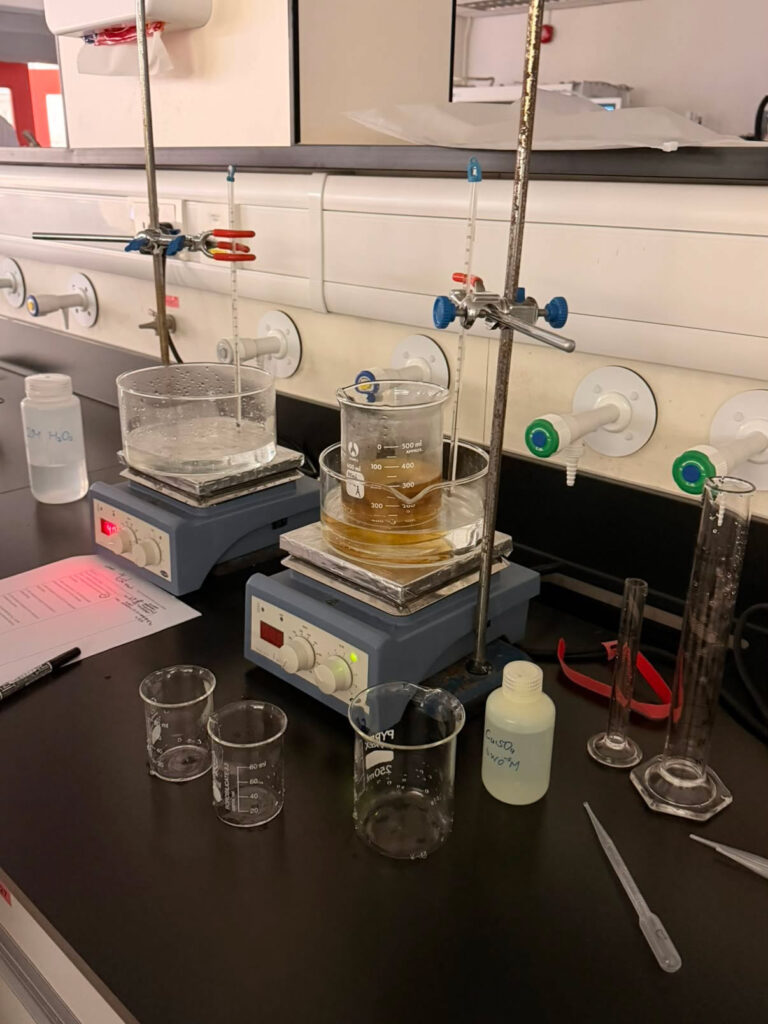
The following four images are from a summer program lab I was involved in, and feature an oscillating chemical reaction involving luminol!
Bioluminescence is a subset of chemiluminescence that occurs within biological organisms. Examples include fireflies and algae. In the lanterns of fireflies, luciferin reacts with ATP and oxygen. This reaction is catalyzed by an enzyme called luciferase, and produces light. It is actually very efficient, and produces almost no heat, unlike traditional lightbulbs.
Electroluminescence
As the name suggests, electroluminescence refers to light generated by electrical energy. How can electrical energy excite electrons? Well, what is electrical energy in the first place?
Electrical energy is created by the movement of charged particles, such as electrons. That is why it is called electrical energy in the first place. In some systems, electric currents pass through a gas, colliding with atoms to excite their electrons. In LEDs, an electric current pushes electrons to combine with positively charged “holes” in a semiconductor, releasing energy directly as photons.
Electroluminescence makes LED lightbulbs and digital screens possible. One of their biggest pros is that they generate light with very little heat.
Incandescence
By this point, we have spent a lot of time talking about electrons getting excited by light. However, electrons can also get excited by heat! If there is a lot of thermal energy in an object, excited electrons will jump to higher energy levels, then drop back down and emit photons. The phenomenon is quite similar to previous cases, but the distinction lies in the source of the energy.
Before further exploration, the question is begged: How will thermal energy excite electrons?
Thermal energy is the total kinetic energy inside an object or system. High kinetic energy means that atoms vibrate intensely, causing continuous acceleration of electric charges that radiates light of varying wavelengths.
When these wavelengths fall in the visible light spectrum, we call it incandescence. Incandescence is responsible for why lava and the sun appear to glow. Old-school light bulbs were also incandescent, meaning that they would heat up tremendously as they were powered.
Of course, the light emitted need not be visible. For example, the heat of your body is partly emitted as infrared light. The umbrella term for light being emitted as a result of thermal energy is black-body radiation. Black-body reflects the idea that the object appears dark by itself, and that the light coming off of it is due solely to its heat. In physics, an ideal black body is an object that absorbs all incoming electromagnetic radiation and does not reflect any. Thus, any light being emitted is theoretically due to thermal radiation.
The concept of thermal radiation implies that any object with a temperature above 0K emits electromagnetic radiation. This concept is invoked by thermal camera sensor technologies.
End of resource content.
By the end of this content, you will have explored ways by which electrons convert energy of various forms into light energy, thus satisfying the law of conservation of energy.
Light plays a major role in our perception of the world, innovation of technology, and activities in daily life.
Next time you learn something new, think about connections to light!
✸ Thank you for reading!
Feel free to submit feedback (questions, suggestions, or areas to point out about this guide) through this form!
This resource was published on The Sparchive on August 10, 2026.